What to Prepare Before Hiring a Web Designer

Hiring a web designer doesn't mean you need to have every detail of your website figured out before the project begins. In fact, part of the process should be working together to understand what your website needs to achieve and how it can best support your business.
But having a few things prepared before that first conversation can make the process much smoother — and help you get more from your website project.
The most useful preparation isn't choosing fonts, finding the perfect template or deciding exactly where everything should sit on the page. It's having a clear understanding of your business, your customers and what you need your website to do.
Whether you're creating your first website or replacing one that no longer works for your business, thinking through a few key areas beforehand will give you and your web designer a much stronger place to start.
01 / Get Clear on What Your Website Needs to Achieve
Before thinking about colours, layouts or individual pages, start with the bigger question: what does your website actually need to do for your business?
For some businesses, the main goal might be generating enquiries or attracting new clients. For others, it could be selling products, taking bookings, showcasing a portfolio, building credibility or giving existing customers easy access to useful information.
You may have more than one goal, but identifying the most important ones helps your web designer make better decisions about the structure, content and functionality of the site.
Try thinking about what you'd like someone to do after visiting your website. Do you want them to book an appointment, make a purchase, request a quote, visit your business or simply understand what you offer?
Having that goal in mind gives the whole project a much clearer direction.
02 / Understand Who Your Website Is For
A website isn't really designed for the business that owns it. It's designed for the people who need to use it.
Before the project begins, think about who those people are and what they're likely to need when they arrive on your website. What questions will they have? What information matters most to them? What might make them hesitate, and what would help them feel confident about taking the next step?

You don't need detailed customer personas or pages of audience research. A good starting point is simply understanding the types of customers you want to attract, what brings them to your website and what they're trying to accomplish when they get there.
It's also worth considering how familiar they are with your business or service. Someone discovering you for the first time may need more explanation and reassurance than an existing customer who simply wants to make a booking or find a particular piece of information.
The clearer you are about who you're speaking to, the easier it becomes to make decisions about your website's content, navigation and overall customer journey.
03 / Think About the Pages and Content You'll Need
You don't need to have every word written before contacting a web designer, but it helps to start thinking about the information your customers will need.
Most websites will need the basics — such as a homepage, information about the business, details of your services or products and a way to get in touch — but the right structure depends on your business and what your customers are trying to achieve.
Think about the content you already have and what may still need to be created. This could include written copy, photographs, service descriptions, pricing, testimonials, FAQs, case studies or examples of your work.
Don't worry if you're not sure exactly which page everything belongs on. Content and structure should be planned around the customer journey, and that's something your web designer can help you work through.
The important thing is knowing what information you have, what's missing and what your customers are likely to need.
04 / Gather Your Brand Assets — If You Have Them
If you already have an established brand, gathering your existing assets before the project begins will help your web designer create something that feels consistent with the rest of your business.
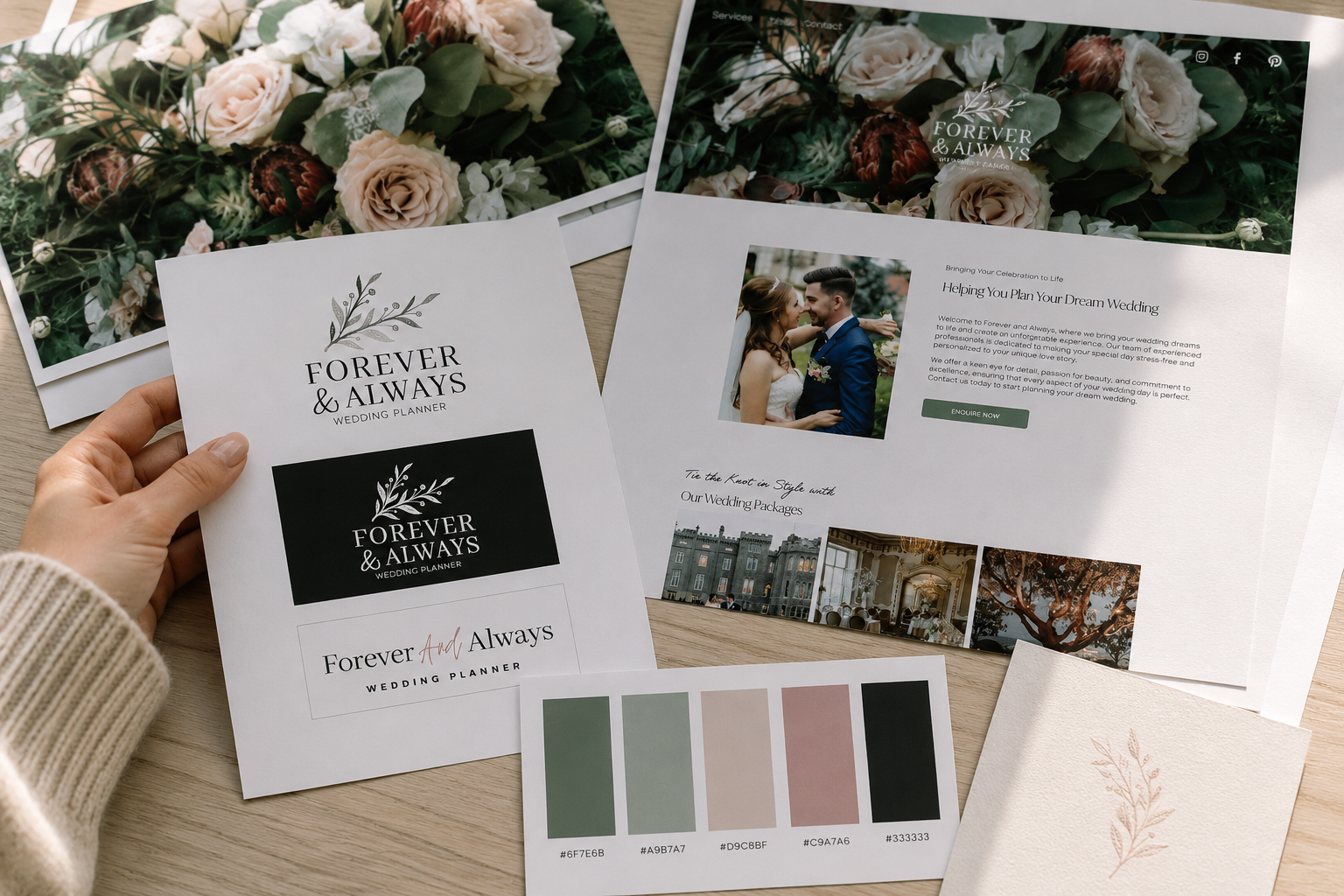
This might include your logo, brand colours, fonts, photography, illustrations or brand guidelines. If you've previously created printed materials, packaging or social media graphics, these can also be useful for understanding how your brand currently looks and feels.
But don't worry if you don't have all of this yet. You don't need a complete brand identity before you can speak to a web designer.
If your branding is outdated, inconsistent or simply doesn't exist yet, it's better to be open about that at the beginning. Depending on the project, your existing brand can be refined, or branding can become part of the wider work.
What's useful is knowing what you already have, what you're happy with and what you might be ready to change.
05 / Think About the Functionality You Need
A website can do much more than display information, so it's worth thinking about what you need customers — and your team — to be able to do through it.
You might need customers to book appointments, make payments, purchase products, register for events, create an account or submit an enquiry. Behind the scenes, you may also need your website to connect with systems you already use, such as a CRM, booking platform, email marketing software or payment provider.
Try to think about the process rather than the technology. You don't need to know which plugin, platform or integration will make it happen. Instead, explain what you need the experience to look like from your customer's point of view and what needs to happen within the business afterwards.
For example, “I need customers to choose an appointment, pay a deposit and receive a confirmation automatically” is much more useful than deciding you need a particular booking plugin before the wider requirements have been considered.
Understanding these requirements early helps your web designer recommend a solution that works for the business now without unnecessarily limiting what you may need in the future.
06 / Have a Realistic Budget and Timeline in Mind
You don't need to know exactly what your website should cost before speaking to a web designer, but having an idea of your available budget can make those early conversations much more useful.
Website projects can vary considerably depending on the size of the site, the amount of content involved, the functionality required and whether additional work such as branding, copywriting or integrations is needed.
Being open about your budget allows your designer to recommend an approach that makes sense within it. If everything on your wish list isn't realistic right away, they can help you prioritise what's most important for launch and what could be added later.
The same applies to your timeline. If you're working towards a particular opening date, event, campaign or other deadline, mention it as early as possible. A good website takes time to plan, create, review and test — particularly when content or input is needed from several people.
You don't need a perfectly planned schedule. A realistic budget, a target date and some flexibility give everyone a much better starting point.
07 / You Don't Need to Have Everything Figured Out
Preparing for a website project doesn't mean arriving at the first conversation with every page planned, every piece of content written and every technical decision already made.
In fact, trying to make all of those decisions before speaking to a web designer can sometimes make the process harder. You may end up choosing a platform, structure or piece of software before you've had a chance to consider whether it's actually the right solution for what you're trying to achieve.

What matters is bringing what you do know: your goals, your understanding of your customers, the content and brand assets you already have, the functionality you think you'll need and any practical considerations such as budget or timing.
There will almost always be things that still need to be worked out. That's part of the process.
A good web designer shouldn't simply take a list of instructions and turn it into pages. They should be able to ask the right questions, identify gaps, challenge ideas where necessary and help turn what your business needs into a website that works for both you and your customers.
You don't need to arrive with all the answers. You just need a good starting point.
A Better Website Starts With Better Preparation
Preparing for a website project isn't about having everything perfectly organised before you begin. It's about understanding enough about your business, your customers and your goals to start the right conversations.
The more context your web designer has, the easier it is to make informed decisions about everything from the structure and content to the functionality and overall customer experience.
And if there are still things you're unsure about, that's completely normal. Part of the value of working with a web designer is having someone who can help you turn those unanswered questions into a clear plan.
A little preparation gives the project direction. The rest can be worked out together.
Ready to get started?
If you're planning a new website and want some help turning your ideas, requirements and goals into something that works for your business, take a look at my website packages to see which approach might be the right fit.